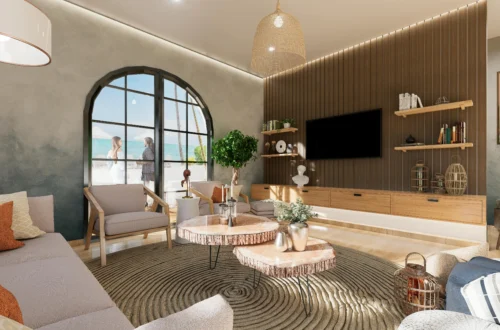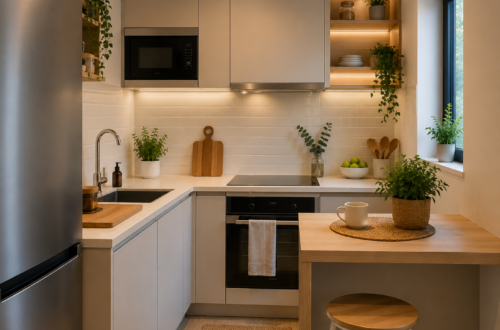
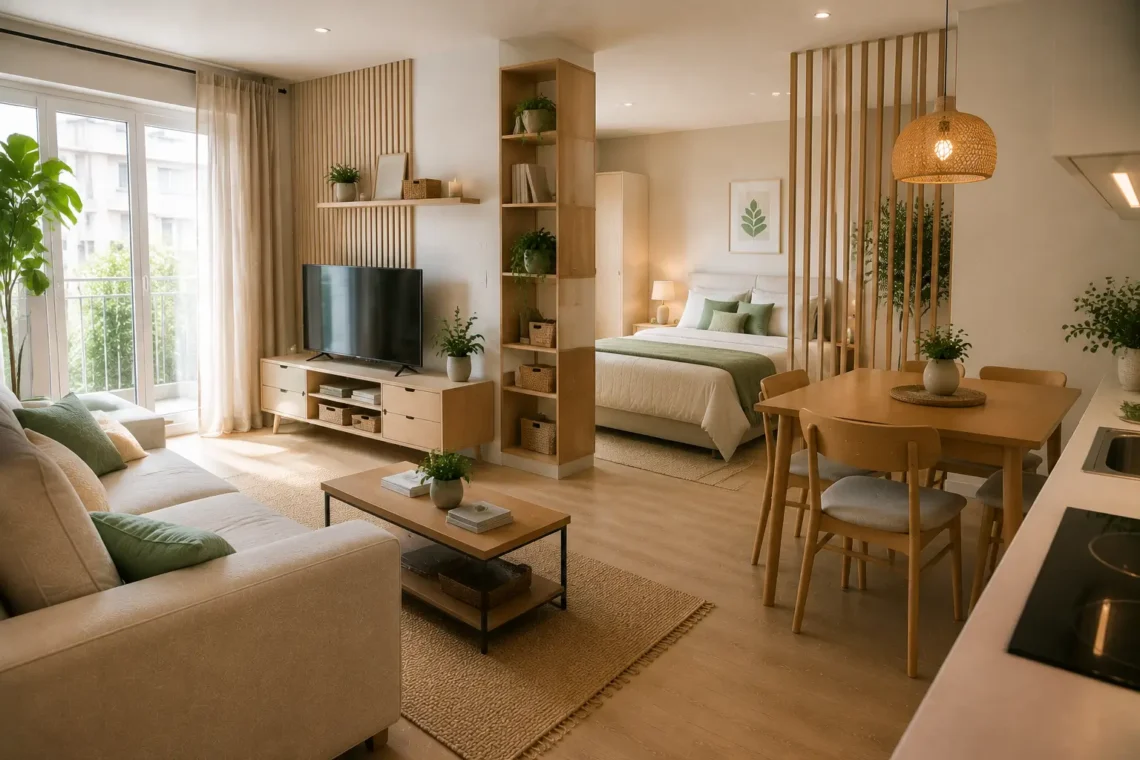
In holiday apartments, especially smaller ones, making the most of every square metre is essential to provide guests with a better stay. Without the need for major renovations, you can transform an open-plan space into a more functional, comfortable, and inviting accommodation simply by creating well-defined areas.
Visually separating the different parts of the apartment makes the space feel more spacious, organised, and welcoming—all key factors that can improve guest reviews and make your listing more appealing.
Article Contents
- Why Is It Important to Define Different Areas?
- Use Rugs to Define Each Area
- Make the Most of Lighting
- Separate Spaces with Furniture
- Create Flow with Colours
- Make Use of the Walls
- Install Lightweight Room Dividers
- Choose Multi-Functional Furniture
- Don’t Forget Storage
- Prioritise the Layout Before the Décor
- Conclusion
1. Why Is It Important to Define Different Areas?
An apartment with well-defined living areas instantly feels more organised, spacious, and comfortable. Even when the kitchen, dining area, and living room share the same open-plan space, each area can still have a clear purpose.
Some of the main benefits include:
- A greater sense of space.
- Better organisation throughout the apartment.
- Improved comfort for guests.
- A more balanced and cohesive interior design.
- More eye-catching photos for holiday rental booking platforms.
A well-planned layout also allows several guests to use the apartment comfortably at the same time, without getting in each other’s way.
2. Use Rugs to Define Each Area
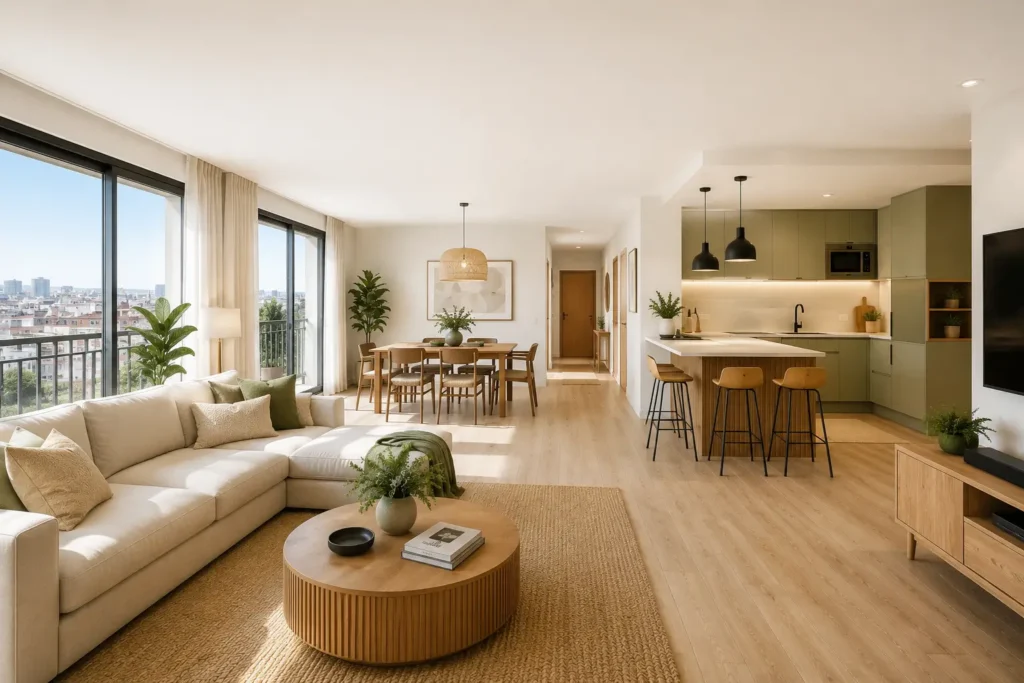
Rugs are one of the easiest and most cost-effective ways to visually separate different areas within an open-plan apartment.
For example, placing a rug underneath the sofa and coffee table instantly defines the living area, while the dining space can be distinguished simply by the dining table and chairs.
This small change adds structure, enhances the perception of space, and gives each corner its own character without the need to build walls.

3. Make the Most of Lighting
Lighting also plays a key role in defining different areas of your apartment.
Instead of relying on a single ceiling light, combine several light sources, such as:
- Pendant lights above the dining table.
- Ambient lighting next to the sofa.
- Task lighting for the kitchen.
- Reading lamps in relaxation areas.
Good lighting not only enhances the overall look of the apartment but also creates a much more warm and welcoming atmosphere.

4. Separate Spaces with Furniture
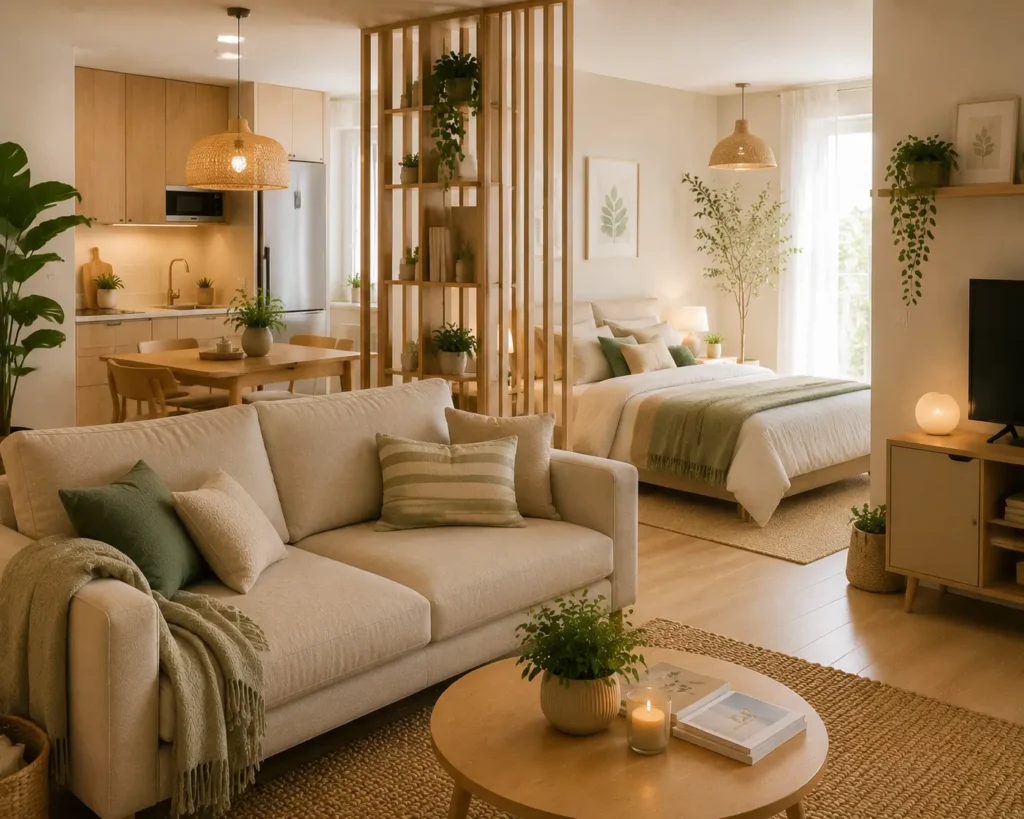
There’s no need to build partition walls to divide an open-plan space. Your furniture can do the job just as effectively.
Some practical options include:
- Open shelving units.
- Low sideboards.
- Console tables.
- Strategically positioned sofas.
- Storage benches.
These solutions allow plenty of natural light to flow through the apartment, improve movement between spaces, and maintain an open, spacious feel.

5. Create Flow with Colours
Defining different areas doesn’t mean using a completely different interior design style for each part of the apartment.
The best approach is to stick to a consistent colour palette and introduce subtle variations to distinguish each area through:
- Cushions.
- Soft furnishings.
- Wall art.
- Curtains.
- Decorative accessories.
This creates a home with a cohesive, stylish, and harmonious look.

6. Make Use of the Walls
Your walls can also help visually organise the space and define different areas.
You can achieve this by using:
- Wallpaper.
- Wood panelling.
- Gallery walls or framed artwork.
- Mirrors to create a greater sense of space.
- Floating shelves.
These features add character and style without taking up any valuable floor space.

7. Install Lightweight Room Dividers
If you’re looking for a little more privacy, there are plenty of lightweight solutions that allow you to separate different areas without blocking natural light.
Some great options include:
- Folding screens.
- Wooden panels.
- Decorative slatted dividers.
- Linen curtains.
- Glass partitions.
These are particularly well suited to studio apartments, lofts, and open-plan homes.

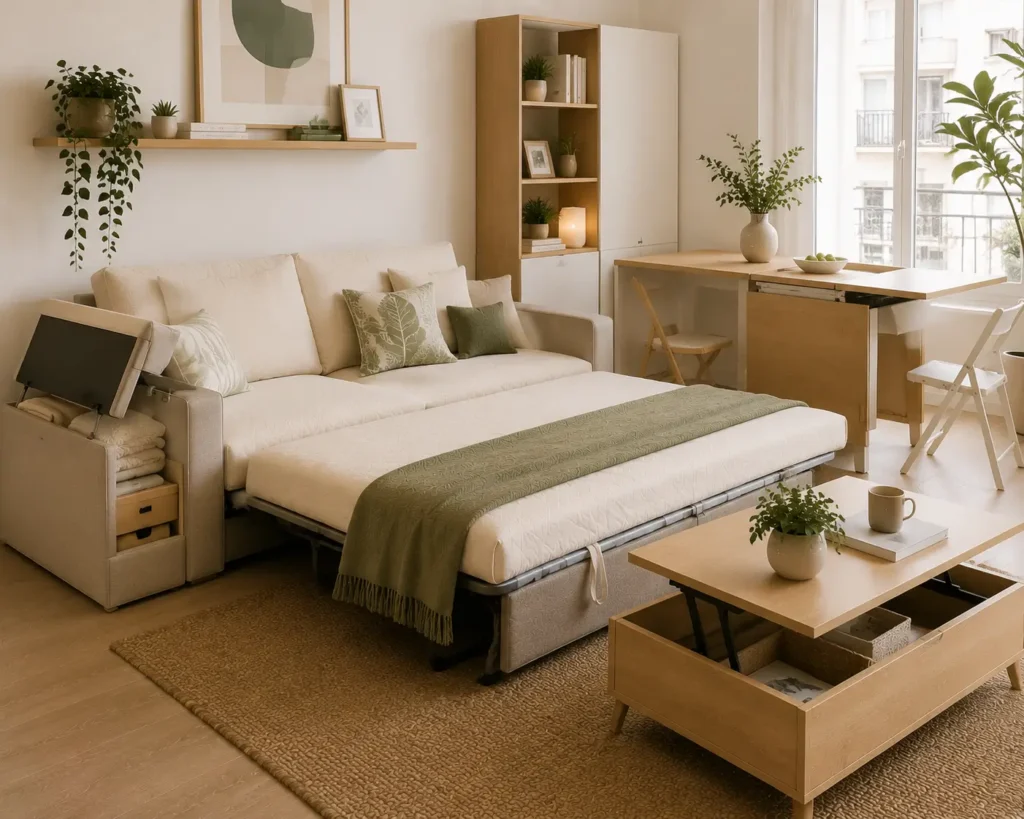
8. Choose Multi-Functional Furniture
In small apartments, every piece of furniture should serve more than one purpose.
Some practical choices include:
- Sofa beds.
- Extendable dining tables.
- Coffee tables with built-in storage.
- Storage benches.
- Beds with built-in drawers.
This type of furniture helps maximise space without compromising on comfort.
9. Don’t Forget Storage
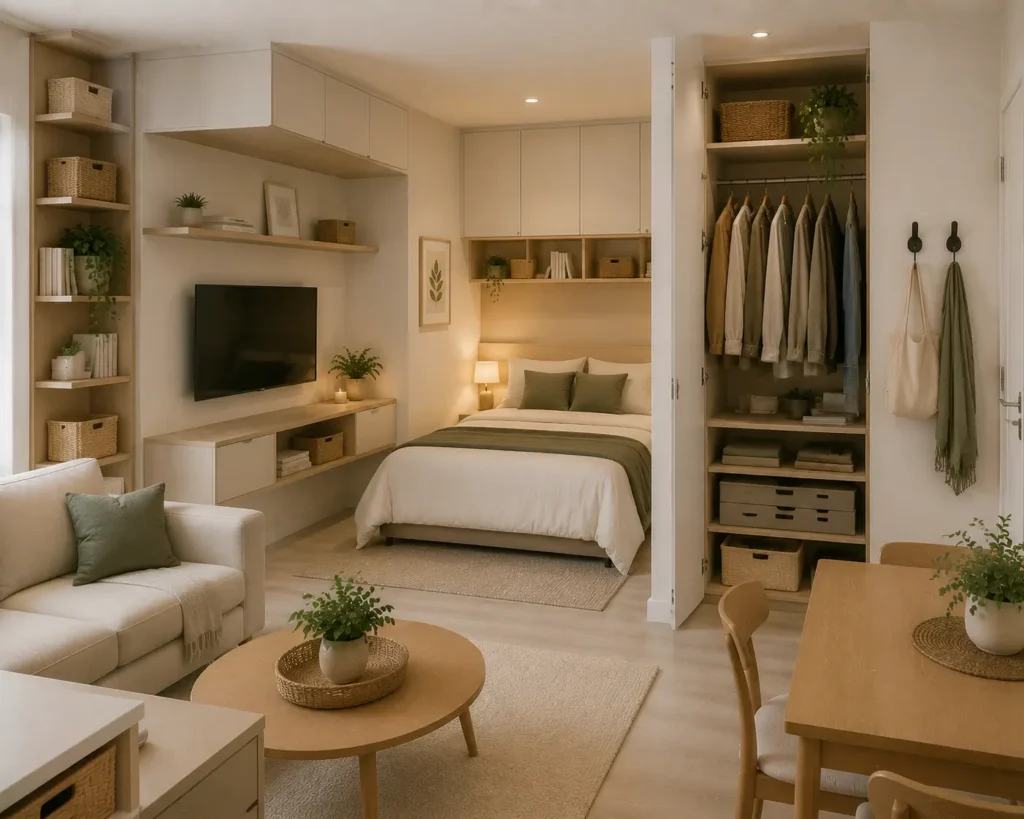
Having enough storage space is essential for keeping the apartment tidy throughout your guests’ stay.
Consider adding solutions such as:
- Decorative baskets.
- Tall shelving units.
- Wall-mounted furniture.
- Floor-to-ceiling wardrobes.
- Hooks on walls and doors.
Guests always appreciate having plenty of places to store and organise their belongings, helping the apartment stay neat and clutter-free.
10. Prioritise the Layout Before the Décor
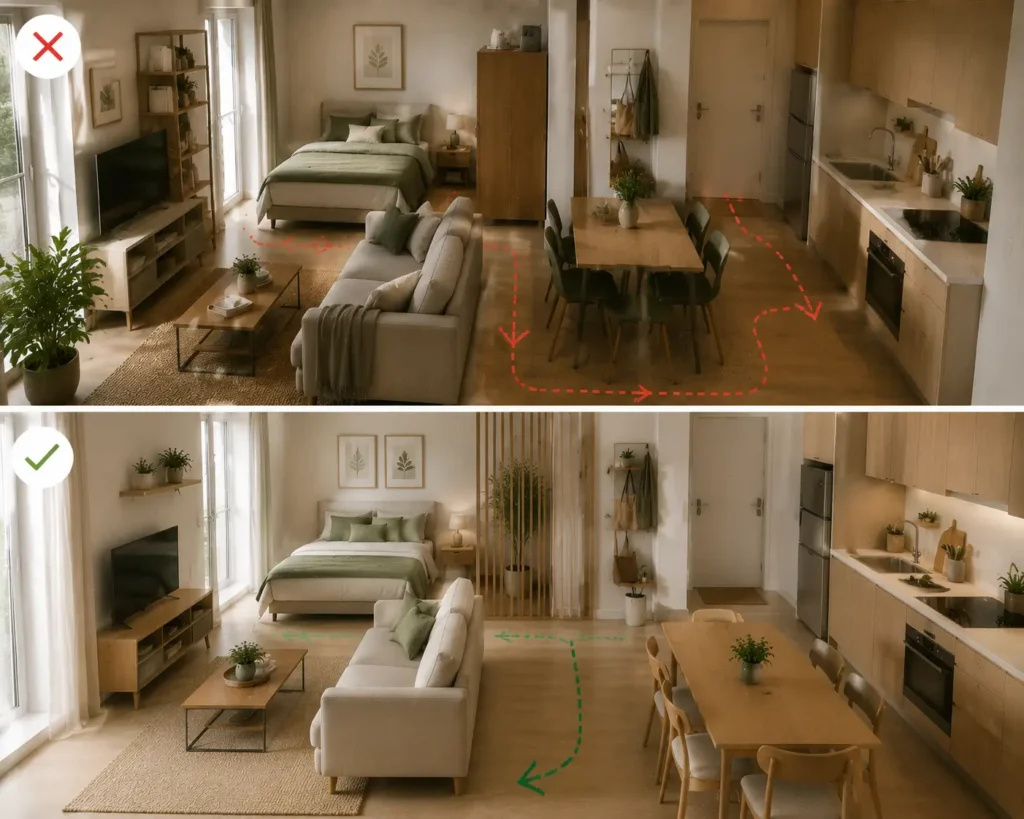
Very often, the issue isn’t the size of the apartment—it’s the layout. Before adding new furniture, think about how people naturally move through the space. Avoid blocking key walkways and make sure there’s a comfortable flow between each area.
A well-planned layout will always feel more spacious, functional, and inviting than a room overcrowded with furniture.
11. Conclusion
Creating clearly defined areas within the same space is one of the most effective ways to improve the functionality, comfort, and overall appeal of a holiday apartment.
With a few simple changes to the layout, lighting, furniture, or interior décor, you can transform any property into a much more attractive place to stay.
In today’s increasingly competitive holiday rental market, paying attention to these details can make all the difference—not only in your listing photos but also in the overall guest experience. The result? Better reviews, more bookings, and happier guests.
If you enjoyed this article, be sure to explore more tips on our Owners’ Blog. You can also get in touch with our team to find out how we can help you maximise your property’s potential.