

Renting out a property on a temporary basis can be an excellent way to generate rental income, but it also comes with certain responsibilities. To avoid misunderstandings, protect your property and maintain a good relationship with your tenants, having a clear and well-drafted rental agreement is essential.
Beyond setting the rental price and duration, this document should outline the terms of the tenancy, the responsibilities of both parties and the procedures to follow if any unexpected issues arise.
If you own an apartment in Barcelona and are considering renting it out for temporary stays, we’ll explain which essential clauses your rental agreement should include and how they can help you manage your property with greater peace of mind.
Table of Contents
- 1. Identification of the parties and property details
- 2. Rental agreement duration and termination conditions
- 3. Rent, security deposit and guarantees
- 4. Maintenance, repairs and responsibilities
- 5. House rules and property use
- 6. Breaches of contract and returning the property
- 7. What should you consider when renting out your property in Barcelona?
- 8. Rent out your property with peace of mind and professional management
1. Identification of the parties and property details
The first step in formalising a rental agreement is to correctly identify the property owner, the tenant and the property itself.
The agreement should include the personal details of both parties, the property’s full address and its main features. It is also advisable to specify whether the rental includes furniture, appliances, storage rooms or parking spaces.
For furnished apartments, including an inventory supported by photographs is particularly recommended. This provides a clear record of the property’s contents and their condition at the start of the tenancy, making it easier to identify any damage when the agreement ends.

2. Rental agreement duration and termination conditions
The duration of the tenancy must be clearly established, specifying the start and end dates and the reason justifying the temporary stay.
For mid-term rentals intended to meet temporary accommodation needs, such as work or studies, it is essential to provide documentary evidence of the reason for the stay and comply with the applicable regulations. The agreement should also specify notice periods, early termination conditions and any potential consequences of ending the tenancy before the agreed date, while always respecting the legal rights of both parties.

3. Rent, security deposit and guarantees
The financial section is one of the most important parts of a rental agreement, as it establishes payment obligations and the protections available to the property owner.
To avoid confusion, it is advisable to specify:
- Monthly rent: amount, payment date and payment method.
- Additional expenses: utilities and other charges that can legally be passed on to the tenant.
- Rent adjustments: conditions under which rent may be reviewed or updated in accordance with applicable regulations.
- Security deposit and guarantees: required amounts and conditions for their return.
In Catalonia, temporary rental agreements for work, studies or other short-term housing needs are subject to the rules governing residential tenancies regarding security deposits, guarantees, rent determination and adjustments, and certain expenses.
Therefore, before establishing the financial terms, it is important to check the applicable rent limits in Barcelona and distinguish between the legally required security deposit and any additional guarantees. The temporary nature of a rental agreement does not, in itself, allow property owners to set any rental price they wish.

4. Maintenance, repairs and responsibilities
Who should pay for a repair? What happens if an appliance breaks down? These situations can lead to disputes if responsibilities are not clearly defined.
As a general rule, the property owner is responsible for repairs necessary to keep the property in a habitable condition, unless the damage is attributable to the tenant.
The tenant, meanwhile, is responsible for minor repairs resulting from ordinary wear and tear, as well as any damage for which they are legally liable.
It is also advisable to establish procedures for reporting issues and requesting repairs. Clearly defining these processes makes property maintenance easier and helps prevent misunderstandings throughout the tenancy.

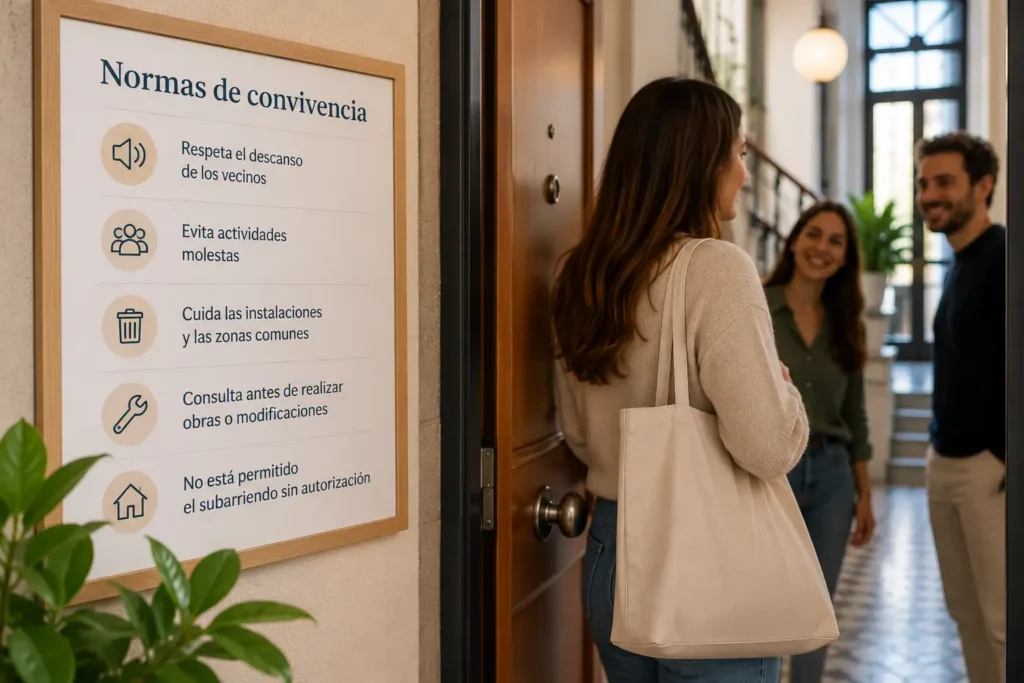
5. House rules and property use
The rental agreement should also establish basic rules to ensure the property is used appropriately and that neighbours and the wider residential community are respected.
It is advisable to include conditions relating to noise, disruptive activities, proper care of the facilities and compliance with building regulations. Issues such as renovations, transferring the rental agreement or subletting can also be regulated, provided these conditions remain within legal limits.
Establishing clear rules from the outset helps protect your property and prevent conflicts with neighbours, particularly in residential buildings.
6. Breaches of contract and returning the property
Even when both parties intend to fulfil their contractual obligations, situations such as unpaid rent, property damage or early termination of the tenancy may arise. For this reason, it is advisable to establish the consequences of potential breaches of contract, while always respecting the legally recognised grounds for termination and the applicable legal procedures.
At the end of the tenancy, it is also important to define the process for returning the property, including handing back the keys, reviewing the inventory and settling any outstanding utility bills or other payments.
Documenting the property’s condition at the beginning and end of the tenancy helps distinguish normal wear and tear from potential damage and makes it easier to return the security deposit when appropriate.

7. What should you consider when renting out your property on a temporary basis in Barcelona?
In addition to the clauses mentioned above, property owners in Barcelona should pay particular attention to regional legislation and rental market regulations.
As Barcelona is officially designated as a high-demand housing market area, certain rental agreements are subject to rent limits.
For stays related to work, studies or other temporary housing needs, it is necessary to provide documentary evidence of the temporary purpose of the stay and verify the applicable rules regarding rent, expenses, security deposits and guarantees. Since the property is located in Barcelona, owners must also check the relevant rent restrictions associated with its designation as a high-demand housing market area.
It is also important to remember that security deposits for urban rental agreements must be registered and deposited with INCASÒL, in accordance with legal requirements, together with the supporting documentation required to demonstrate the temporary nature of these agreements.
For this reason, before signing any rental agreement, it is advisable to ensure that the purpose of the stay and all the contractual conditions comply with current legislation.
8. Rent out your property with peace of mind and professional management
A well-drafted rental agreement is essential for protecting your property, but successful rental management involves much more. Tenant screening, document verification, payment monitoring and resolving issues are all key aspects of ensuring a positive rental experience.
At AB Apartment Barcelona, we have extensive experience managing rental properties in Barcelona. We help property owners maximise the potential of their apartments by taking care of the different stages of the rental process.
Do you own an apartment in Barcelona and want to rent it out with greater peace of mind? Discover our property management services for owners and let our team help you manage your apartment professionally, conveniently and efficiently.
Found this article useful? Take a look at our Property Owners Blog for more helpful articles. And if you’re a property owner looking for expert advice from our team, don’t hesitate to get in touch with us!