In small apartments, every decision matters. The layout, colors, furniture and, above all, the lighting directly influence how the space is perceived. Good lighting not only enhances the apartment’s functionality, but can also make it feel more spacious, tidier and more inviting—something especially important when the property is intended for rental.
Many property owners underestimate the impact of lighting and focus solely on structural aspects. However, a well-planned lighting strategy can completely transform an apartment without the need for major renovations.
Article Contents
- Lighting as a Tool to Create a Greater Sense of Space
- Making the Most of Natural Light
- General, Task and Ambient Lighting
- Avoiding Shadows and Dark Corners
- Choosing Fixtures Proportionate to the Space
- Why Light Temperature Matters
- Lighting and the Perceived Value of the Apartment
- Thinking of Lighting as Part of the Overall Design
1. Lighting as a Tool to Create a Greater Sense of Space

Light has a direct impact on the perception of space. Well-lit interiors feel more open and balanced, while poor or uneven lighting can make an apartment seem smaller than it actually is.
In small apartments, the goal is not just to add light, but to do so in a smart way. Combining different light sources and avoiding dimly lit areas helps create visual depth and eliminate the feeling of confinement.
2. Making the Most of Natural Light

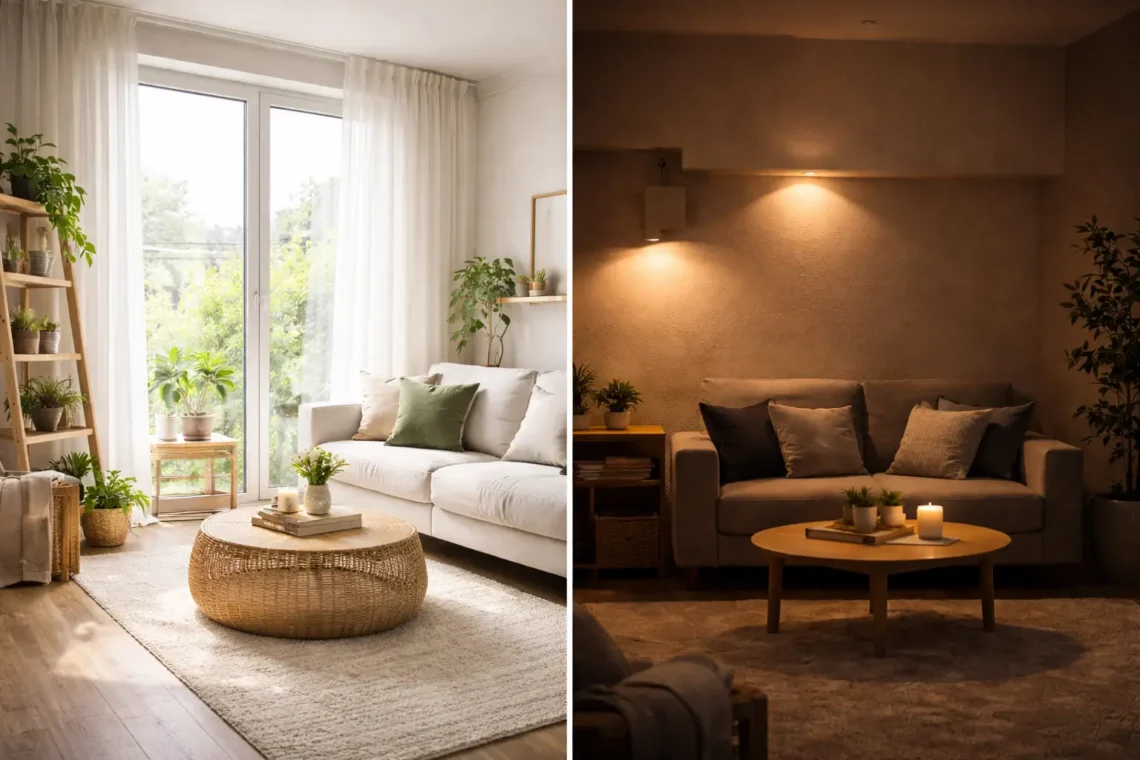
Natural light should always be the starting point. Keeping windows clear, avoiding heavy curtains and choosing lightweight fabrics allows more light to flow in. In compact spaces, this makes a clear difference.
It is also advisable to use light colors on walls and ceilings, as they reflect natural light more effectively and contribute to a greater sense of spaciousness. Matte finishes generally work better than glossy ones, as they prevent excessive glare and create a more uniform look.
3. General, Task and Ambient Lighting

One of the key principles when lighting a small apartment is not to rely on a single light source. Combining different types of lighting allows you to adapt the space to different uses and times of day.
General lighting provides an even base layer throughout the space. Task lighting is ideal for specific areas such as the kitchen, desk or reading corner. Finally, ambient lighting adds warmth and helps create a more inviting atmosphere, something especially valued in rental properties.
4. Avoiding Shadows and Dark Corners

Poorly positioned shadows can visually shrink a room. In small apartments, it’s best to avoid lamps that direct light only downward or create overly harsh contrasts.
A good practice is to direct light toward walls or ceilings so it can reflect and spread more evenly throughout the room. This softens the overall feel and makes the space appear larger without the need to add more light fixtures.
5. Choosing Light Fixtures Proportionate to the Space

The size and design of light fixtures also play an important role. Oversized lamps can visually overwhelm a small room, while more discreet options blend more seamlessly into the overall design.
Wall sconces, LED strips or recessed spotlights are often effective solutions because they don’t take up space and allow for functional and well-organized lighting. They also help create a cleaner visual perception of the space, which is key to making a great first impression.
6. Why Light Temperature Matters

It’s not just about how much light there is, but also what type of light you use. Warm light temperatures create a sense of comfort and homeliness, while overly cool lighting can feel impersonal, especially in areas such as the living room or bedroom.
In small apartments, warm or neutral lighting usually works best, as it creates a balanced and inviting atmosphere without making the space feel darker. Ideally, you should maintain consistency throughout the apartment to avoid unnecessary contrasts.
7. Lighting and the Perceived Value of the Apartment

Well-designed lighting not only enhances the tenant experience, but also influences how the property’s value is perceived. A well-lit apartment conveys care, functionality and attention to detail.
In the rental market, this can make the difference between a property that goes unnoticed and one that stands out from similar listings. In addition, good lighting reduces complaints related to comfort and use of space.
8. Thinking of Lighting as Part of the Overall Design

Lighting should not be treated as an isolated element. It works best when integrated with the layout, furniture and the apartment’s color scheme. A holistic approach allows you to make the most of the available space without the need for major investments.
Reviewing the lighting on a regular basis and adapting it to the actual use of the apartment is a practical decision that enhances both the tenant experience and the long-term performance of the property.
If you found this article helpful and would like to read more, visit our Owners’ Blog. If you are thinking about selling your property with an experienced team, feel free to get in touch with us — we’ll be happy to help!