

Are you thinking about selling your property in Barcelona and have just discovered that its certificate of occupancy (cédula de habitabilidad) has expired? This can raise a few questions, especially if you’ve already found an interested buyer or are getting your paperwork ready to complete the sale before a notary.
The good news is that, in many cases, there’s a solution. However, it’s important to understand what Catalan regulations require, when you need to renew this certificate and under what circumstances you can sell a property without a valid one.
Here’s everything you need to know to avoid complications during the sale.
Table of Contents
- 1. What is a certificate of occupancy and why is it important?
- 2. Can you sell a property with an expired certificate of occupancy?
- 3. What exceptions allow you to sell without a valid certificate?
- 4. How do you renew an expired certificate of occupancy in Barcelona?
- 5. What happens if the property doesn’t meet habitability requirements?
- 6. Tips for selling your property without complications
1. What is a certificate of occupancy and why is it important?
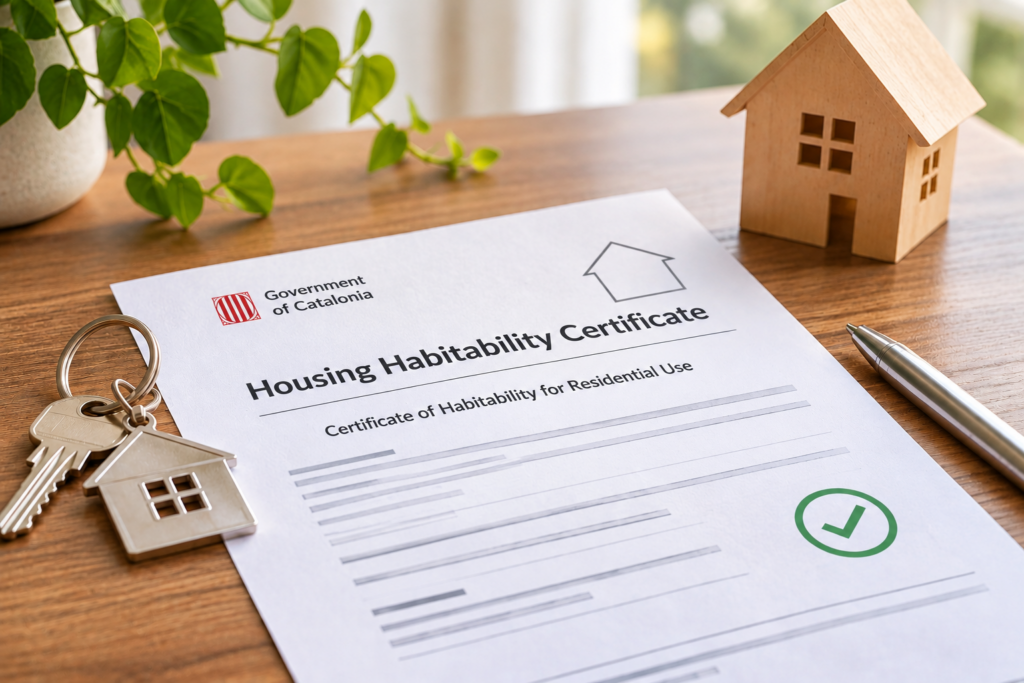
The certificate of occupancy (cédula de habitabilidad) is an official document confirming that a property meets the minimum standards required for residential use, in accordance with current regulations in Catalonia.
Among other details, it specifies the property’s usable floor area, its rooms and living spaces, and the maximum number of occupants permitted.
This document is required when selling, renting out or transferring the right to use a residential property, as well as when setting up certain utility services, such as water, electricity or gas.
There are several types of certificates of occupancy in Catalonia:
- First occupancy: for newly built properties. Valid for 25 years.
- Second occupancy: for existing properties. Valid for 15 years.
- First occupancy following renovation: for properties resulting from certain types of renovation work. Valid for 15 years.
It’s worth remembering that having a certificate of occupancy doesn’t necessarily mean that the property complies with all planning and building regulations.
2. Can you sell a property with an expired certificate of occupancy?
This is one of the most common questions among homeowners looking to sell their property.
In Catalonia, the general rule is that a property must have a valid certificate of occupancy at the time of sale.
Law 18/2007 on the right to housing establishes this requirement and states that the certificate must be provided to the buyer, except in certain cases where an exemption applies.
Therefore, if your certificate has expired, it’s advisable to start the renewal process before completing the sale.
Does this mean you can’t sell your property under any circumstances? Not necessarily. The law provides for certain exceptions, although specific requirements must be met.
What you cannot do is simply waive the certificate because the buyer agrees to proceed without it, unless there is a legal basis for doing so.

3. What exceptions allow you to sell without a valid certificate?
Article 132 of Law 18/2007 sets out circumstances in which the buyer may expressly exempt the seller from the obligation to provide a certificate of occupancy.
These include:
Properties requiring renovation
If a property requires renovation work, the sale may be completed without a valid certificate of occupancy, provided certain conditions are met.
In this case, a report prepared by a qualified professional must be presented to the notary, confirming that the property will be eligible for a certificate once the necessary work has been completed.
Properties intended for demolition
An exemption may also apply when the property being purchased is intended for demolition.
Properties that will not be used for residential purposes
Where both the buyer and seller expressly acknowledge that the property will not be used as a residence, the regulations allow this exemption to apply.
Each of these situations must be assessed individually and properly documented. That’s why, before relying on an exemption, it’s advisable to consult the notary who will oversee the sale.

4. How do you renew an expired certificate of occupancy in Barcelona?
If your property meets the required habitability standards and hasn’t undergone significant alterations that would require a different type of certificate, the usual procedure is to apply for a new second-occupancy certificate.
To do so, you’ll need to follow these steps:
- Check its current status: find out whether your property already has a valid certificate through the Catalan Housing Agency.
- Contact a qualified professional: an architect, technical architect, building surveyor or building engineer will need to inspect the property.
- Obtain a habitability assessment certificate: if the property meets the requirements, the professional will issue the relevant certificate.
- Submit your application: you’ll need to apply through the relevant authority, provide the required documentation and pay the applicable fee.
According to information published by the Catalan Government, the authority has 30 working days from receipt of a complete application to notify you whether the certificate has been granted or refused.
So, if you’re planning to sell your property, it’s best not to leave this until the last few days before completion.

5. What happens if the property doesn’t meet habitability requirements?
Renewing a certificate of occupancy isn’t always straightforward. If an inspection reveals that the property doesn’t meet the minimum required standards, you’ll need to establish what improvements are necessary.
Depending on the property’s condition, renovation work may be required to bring it into line with the applicable regulations.
It’s also important to bear in mind that habitability requirements may vary depending on the age of the property and the specific regulations that apply to it.
In these situations, it’s best to arrange a professional assessment before committing to a completion date for the sale.
If the property requires renovation, it’s also worth checking whether the sale meets the legal conditions for one of the available exemptions.

6. Tips for selling your property without complications
When you decide to put your property on the market, it’s easy to focus on the asking price, photographs and finding potential buyers. However, checking your paperwork from the outset can save you a lot of hassle further down the line.
Before putting your property up for sale, we recommend:
- Checking the expiry date of your certificate of occupancy.
- Applying for a renewal well in advance if your certificate has expired.
- Seeking professional advice if the property has undergone major renovations.
- Preparing your energy performance certificate (EPC) and any other documentation required for the sale.
- Clarifying any exceptional circumstances before agreeing on a date to sign the sale documents before a notary.
Has your certificate of occupancy expired, but you still want to sell your property in Barcelona? This doesn’t necessarily mean you have to put your plans on hold. However, you will need to get your paperwork in order or check whether you qualify for a legal exemption.
Taking care of these formalities early on will help you approach the sale with greater peace of mind, transparency and confidence.

Do you have questions about your certificate of occupancy, or are you thinking about selling your property in Barcelona? Visit our Property Owners’ Blog for more tips and useful insights into the property market. And if you’re looking for expert advice on selling your property, don’t hesitate to get in touch with our team. We’ll be happy to help!


