Lighting is one of the most underrated elements in an apartment, yet it has a major impact on how the space is perceived. It not only affects guest comfort, but also influences the sense of quality, spaciousness, and warmth.
When designing or upgrading a rental property, it’s essential to understand the difference between functional lighting and decorative lighting — and, most importantly, how to combine them effectively.
Article Contents
- 1. What is functional lighting?
- 2. What is decorative lighting?
- 3. Key differences between the two
- 4. Why is it important to combine them?
- 5. How to apply an effective lighting strategy in your apartment
- 6. The direct impact on bookings
- 7. Conclusion
1. What is functional lighting?

Functional lighting is designed with a practical purpose: to provide clear visibility and allow everyday activities to be carried out comfortably. It forms the foundation of any well-designed space.
Examples in a tourist apartment:
- General lighting in the living room or bedrooms
- Kitchen lighting (countertops, stove area)
- Bathroom lighting, especially around the mirror
- Lighting in transition areas such as hallways or entrances
It’s the kind of lighting guests use without thinking — but immediately notice when it’s not working properly.
Common mistakes:
- Insufficient lighting in key areas
- Overly cool tones that create discomfort
- Poor placement of light sources
2. What is decorative lighting?

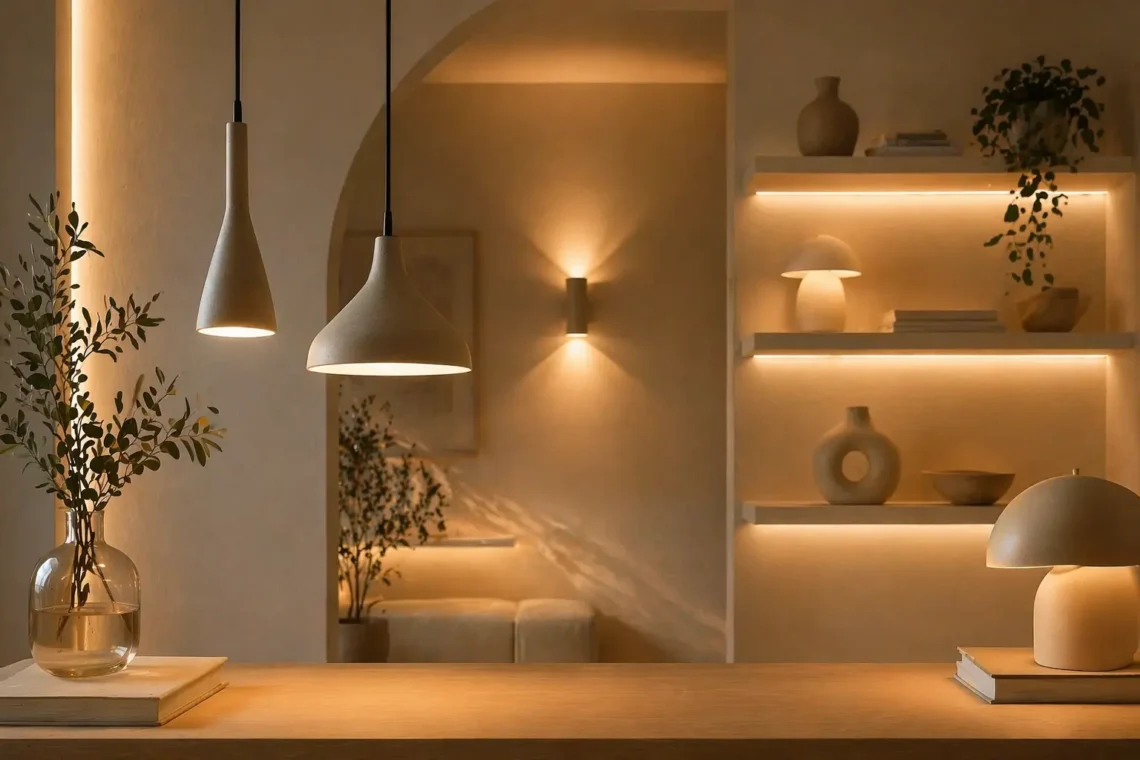
Decorative lighting isn’t primarily about visibility, but rather about creating atmosphere and evoking a certain mood.
It’s what transforms a standard apartment into an inviting space full of personality.
Examples:
- Floor lamps in the living room
- Warm, indirect lighting
- Wall sconces
- Lighting on shelves or headboards
This type of lighting is key to creating that “I could stay here” feeling, especially in photos and on social media.
3. Key differences between the two
| Functional lighting | Decorative lighting |
|---|---|
| Practical purpose | Aesthetic purpose |
| Lights up the entire space | Creates atmosphere |
| Continuous use | Complementary use |
| Improves usability | Enhances perception |

4. Why is it important to combine them?

An apartment with only functional lighting can feel flat and uninviting. On the other hand, one with only decorative lighting may look great but be impractical. The key lies in balance.
When both are combined correctly:
- Guests feel comfortable at any time of day
- The space gains personality
- Apartment photos improve significantly
- The perceived quality increases (and with it, the value of the property)
5. How to apply an effective lighting strategy in your apartment

It’s not about making a huge investment, but about making smart decisions. Keep the following in mind:
1. Ensure a solid functional base
Each room should be properly lit for its main purpose. Pay special attention to the kitchen, bathroom, and workspace.
2. Add warm lighting points
Introduce indirect lighting to create atmosphere, especially in the living room and bedrooms.
3. Play with heights and types of lighting
Combining ceiling lights, wall lights, and floor lamps adds dynamism to the space.
4. Avoid overly cool lighting
Neutral or warm tones tend to work best in tourist accommodations.
5. Think about the guest experience
Lighting for cleaning is not the same as lighting for relaxing — both should coexist.
6. The direct impact on bookings

Lighting doesn’t just affect the stay — it also influences booking decisions.
A well-lit apartment:
- Stands out more on platforms like Airbnb or Booking
- Creates better first impressions in photos
- Reinforces the sense of comfort and care
In many cases, small lighting improvements can have a greater impact than a full renovation.
7. Conclusion
Functional and decorative lighting don’t compete — they complement each other. While one ensures comfort, the other builds the experience. And in an increasingly competitive market, it’s the details that create emotions that truly make the difference.
If you found this article useful and would like to read more, check out our Owners Blog. If you’re a property owner and would like to sell your apartment with the help of an expert team, don’t hesitate to get in touch with us — we’ll be happy to help!